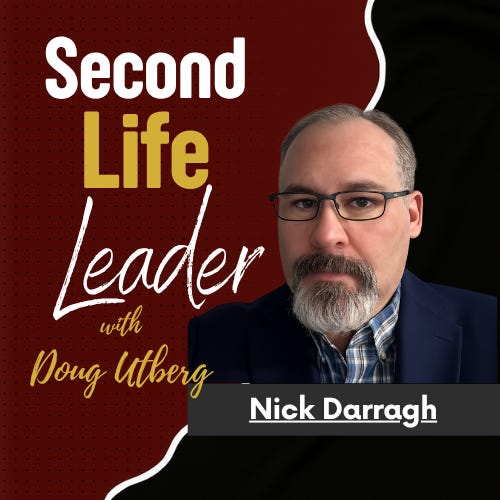
Nick Darragh joins the conversation to explore how today’s financial landscape has been shaped by years of cheap capital—and why the consequences are only now becoming impossible to ignore.
The discussion examines how prolonged low interest rates fueled massive investment into technology companies, encouraged unsustainable business models, and created an environment where growth often mattered more than profitability.
Nick explains how easy access to capital distorted markets, allowing companies to prioritize rapid expansion over long-term value. As interest rates rose, many of those same businesses were forced to confront the realities of sustainable operations, exposing weaknesses that had been hidden during years of inexpensive financing.
The conversation also explores risk management, capital allocation, and why healthy markets require cycles of correction rather than endless intervention.
Most importantly, it’s a reminder that strong businesses aren’t built on cheap money.
They’re built on disciplined decision-making.
TL;DR
Cheap capital can fuel innovation—but it can also create unhealthy markets.
Long periods of low interest rates encouraged unsustainable business models.
Businesses eventually have to prove they can create real value, not just attract investment.
Risk management should focus on long-term resilience rather than short-term growth.
Healthy economies need correction cycles that allow stronger businesses to emerge.
Great leaders constantly evaluate both opportunities and potential risks before making decisions.
Memorable Lines
“Cheap money changes how businesses behave.”
“Growth without sustainability eventually catches up.”
“Risk isn’t something you avoid—it’s something you manage.”
“Healthy markets need room to correct themselves.”
“Think about the vision, but never ignore the pitfalls.”
“Long-term value always outlasts short-term hype.”
Guest
Nick Darragh
CFO at Protocol, where he helps oversee financial strategy, risk management, and operational decision-making. His background in finance and risk management gives him a practical perspective on capital allocation, market cycles, and building businesses that remain resilient through changing economic conditions.
Why This Matters
For years, inexpensive capital allowed companies to prioritize growth over sustainability.
Many succeeded.
Others survived only because money was easy to access.
As economic conditions change, businesses are being forced to answer a much harder question:
Can you create lasting value without relying on unlimited capital?
The organizations that thrive won’t necessarily be the fastest-growing.
They’ll be the ones with disciplined leadership, thoughtful risk management, and business models designed to succeed even when the market changes.