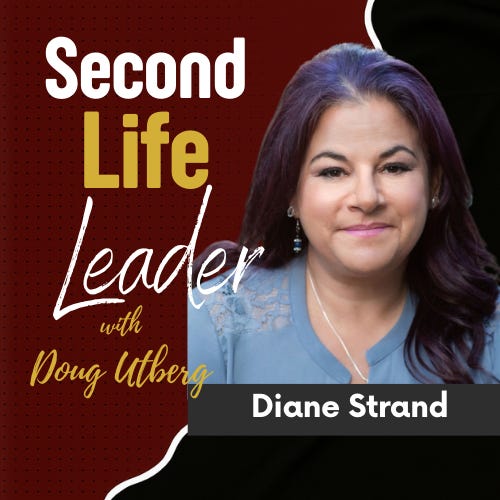
Executive producer and creative entrepreneur Diane Strand joins me to unpack a question most operators overlook: What if the arts teach the exact skills leaders need to survive volatility?
We talk about discipline, rejection, resilience, visibility, and why creatives may be better prepared for uncertainty than most executives realize. From auditions and rehearsals to launching seven- and eight-figure ventures, Diane makes the case that the arts don’t just produce performers—they produce entrepreneurs.
Most corporate environments reward stability and caution. The arts reward iteration, discomfort, and persistence. That tension is the heart of this conversation.
We explore why artists must become “creativepreneurs,” how passion evolves into purpose—and then into profit—and why the discipline learned on stage often translates directly into leadership, influence, and business growth.
This isn’t a romanticized view of creativity. It’s a pragmatic look at how rehearsal, rejection, and reinvention create durable operators.
TL;DR
The arts teach resilience through repetition and rejection.
Rehearsal discipline mirrors business preparation.
Passion without business structure stalls.
Visibility is a skill, not luck.
Start before you’re ready. Momentum creates clarity.
There is no real “backup plan”—only commitment.
Creative skills are leadership skills.
Memorable Lines
“Start before you’re ready.”
“Get comfortable being uncomfortable.”
“Passion becomes purpose. Purpose becomes profit.”
“Leadership doesn’t get easier—it becomes more public.”
“If you want something done, find a theater kid.”
Guest
Diane Strand — Executive Producer, Serial Entrepreneur, Author, and Founder
Founder of JDS Studio, video producer, acting coach, nonprofit leader, and advocate for arts-based entrepreneurship.
Diane works at the intersection of creativity and commerce—helping artists, executives, and founders become more visible, more disciplined, and more intentional about building sustainable careers.
Why This Matters
The modern economy doesn’t reward rigidity. It rewards adaptability.
Rejection cycles aren’t unique to actors. Founders pitch and get rejected. Consultants propose and get ignored. Leaders cast vision and face resistance. The rehearsal process of the arts mirrors the repetition required in business.
For founders, operators, and executives rebuilding after setbacks, this episode reframes creativity as operational leverage.
The skill is not talent.
The skill is disciplined persistence under uncertainty.