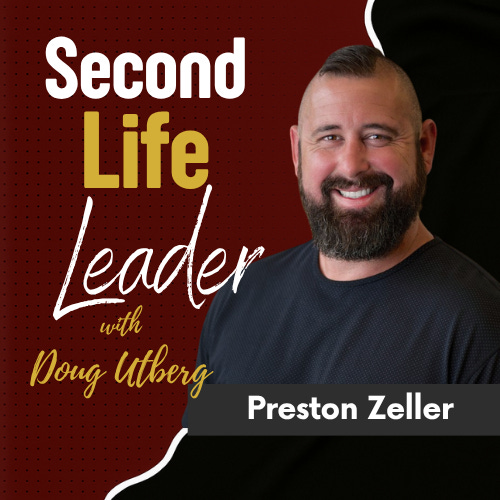
Founder and creative professional Preston Zeller joins me to unpack a conversation most workplaces avoid—but everyone eventually faces: grief, and how it reshapes the way we work, lead, and live.
This episode starts with a moment that changes everything. In early 2019, Preston lost his brother unexpectedly to a drug overdose. At the same time, he was navigating intense professional pressure during a major company merger, supporting a young family, and trying to function in environments that had no real framework for processing loss.
What follows isn’t a polished narrative—it’s a raw look at what happens when your internal world collapses while external expectations keep moving.
We explore the disconnect between how grief actually works and how culture expects it to work. It doesn’t follow timelines. It doesn’t resolve neatly. And it doesn’t stay separate from your performance, your relationships, or your identity.
Preston shares how this experience forced him to confront emotional suppression, anger, and the limits of “pushing through.” Instead of defaulting to distraction through work, he committed to a daily creative practice—painting every day for a year—as a way to process what couldn’t be verbalized.
That process became more than personal therapy. It evolved into a documentary, a framework for self-reflection, and ultimately a shift in how he led teams and approached empathy in the workplace.
We also dig into a reality most leaders don’t want to confront: people don’t leave their personal lives at the door. Grief, trauma, and emotional strain show up in productivity, decision-making, and team dynamics—whether acknowledged or not.
Ignoring it doesn’t protect performance. It erodes it.
This is a candid conversation about loss, emotional awareness, creative processing, and what it actually means to support people—not just as employees, but as humans navigating difficult realities.
TL;DR
Grief doesn’t follow a schedule—and it doesn’t stay outside of work.
Emotional suppression shows up as anger, burnout, or disconnection.
Creative expression can process what logic can’t.
“Pushing through” often delays—not resolves—pain.
Empathy in leadership isn’t soft—it’s practical.
People don’t need solutions in grief—they need space and presence.
Workplaces that ignore human realities pay for it in performance.
Memorable Lines
“Grief isn’t one emotion—it’s all of them at once.”
“You can’t schedule when something hits you—but you can choose how you process it.”
“People at work aren’t distracted—they’re carrying something.”
“Empathy isn’t fixing—it’s being willing to sit in it.”
“What you don’t process doesn’t disappear—it leaks.”
Guest
Preston Zeller — Creative professional, former Chief Growth Officer, and abstract artist
Creator of a year-long painting project and documentary exploring grief, emotion, and creative processing
Why This Matters
Most organizations are built for output, not reality. But reality always wins.
Loss, stress, and emotional strain don’t pause for deadlines or KPIs. Leaders who understand this—and adapt—build stronger teams, deeper trust, and more sustainable performance.
For founders, operators, and executives, this episode reframes empathy as a strategic advantage. Not because it feels good—but because it works.
The goal isn’t to eliminate hardship. It’s to build systems—and people—capable of carrying it without breaking.